— CALL FOR PAPERS —
American Association of Geographers (AAG) Annual Meeting
Honolulu, Hawaii, April 16-20, 2024
Session Title: Ocean society. Ecological heterogeneous assemblages, more-than-human kinships, and social engagement practices in the AnthropOcean
Organizers
Chiara Certomà, University of Turin, Italy
Gabriella Palermo, University of Palermo, Italy
On the belief that the Oceans “hold the keys to an equitable and sustainable planet”, the U.N. proclaimed the Ocean Decade 2021-2030 and called not only for documenting and tackling the ongoing changes affecting the AnthropOcean (Romero Castillo, 2022), but also for mending the rifts between society and the ocean. Strengthening attachment to the sea and encouraging human society to adopt an affective gaze toward the sea, however, requires a transformation of our understanding of the materiality and significance of the ocean.
While it is true that the ocean as a space has long remained marginal within the geographical discipline, more recently a sea-focused knowledge is emerging from multiple perspectives building what is now known as the Oceanic Turn (Anderson and Peters 2014; DeLoughrey 2017; Peters et al. 2023). This increasing interest is devoted to the multiple social spatialities that emerge from the ocean’s liquid materiality; the more-than-human kins that occur at the sea (Haraway,2016); the turbulences, liquidities and temporalities of the ocean (Steinberg and Peters, 2013); and the multiple forms of human societal engagement and participation in recombinant marine ecologies (Brennan,2022; Buchan et al., 2023). Pivotal, in these Critical Ocean Geographies, is the work of geographers such as Philip Steinberg (2001) and Kimberley Peters (2010) and their more-than-wet ontologies (Steinberg and Peters 2019): the ocean materiality, excessive and extensive, can help us to think-with other politics, other possible futures, new ways of living and dying.
This session welcomes multimodal forms of presentation and hosts an exhibition of artistic photographs and visual materials to stimulate creative, innovative and participatory contributions. Contributions are invited on (but not limited to):
– the multiple ways of creating connection with marine life, including participatory, collective and transformative practices;
– new interpretation of the sea as a conceptual and physical space to reconsider our relationship with the complex, heterogeneous and mutable ecological systems of the Anthropocene (Deloughrey, 2017);
– the drastic and dramatic changes affecting the AnthropOcean and how human society is reading and tackling them;
– the theoretical explorations, field-based examples and methodological dissertations across the social and natural research (De Wolff, 2017);
– social, cultural, political and ecological engagement with the oceanic.
– Blue Humanities, new materialism, relational approaches
– more-than-wet worlds, imaginative processes of the AnthropOcean, planetary futures.
The session is sponsored by the AAG COMA Coastal and Marine Specialty Group.
Submissions
Send your abstract (max. 250 words) to Chiara Certomà (chiara.certoma@unito.it) and Gabriella Palermo gabriella.palermo@unipa.it by Monday November 3rd. Accepted applicants will be notified by November 8th. Please send your registration PIN along or make sure you can get it within a few days after the deadline.
References
Anderson J., Peters K. (2014) (eds.), Water Worlds: Human Geography of the Ocean, Ashgate, Farnham.
Brennan, R. (2022) Making space for plural ontologies in fisheries governance: Ireland’s disobedient offshore islands, Maritime Studies
Buchan P., Evans L., Pieraccini M., Barr S. (2023). Marine citizenship: the right to participate in the transformation of the human-ocean relationship for sustainability, PLoS ONE
Deloughrey, E. (2017) “Submarine futures of the Anthropocene”, Comparative Literature
De Wolff, K. R. (2017). Plastic Naturecultures: Multispecies Ethnography and the Dangers of Separating Living from Nonliving Bodies, Other
Haraway, D. (2016) Saying with the trouble, Duke Univ. Press
McKinley, E., Acott K., Yates K. (2020) “Marine social sciences: Looking towards a sustainable future”, Environmental Science & Policy, 108
Peters, K. (2016) Water worlds: Human geographies of the ocean, Routledge;
Peters, K. et al. (2022) (eds.) The Routledge Handbook of Ocean Space, Taylor & Francis;
Peters K., Steinberg P. (2019), The Ocean in Excess. Towards a more-than-wet ontology. Dialogues in Human Geography, 9 (3), 293 – 307.
Romero Castillo, C. (2022) Antropoceano.Cuidar los mares para salvar la vida, Espasa
Steinberg, P. (2001) The social construction of the ocean, Cambridge Univ.Press
Steinberg P., Peters K. (2015) “Wet ontologies, fluid space”, Environment and Planning D
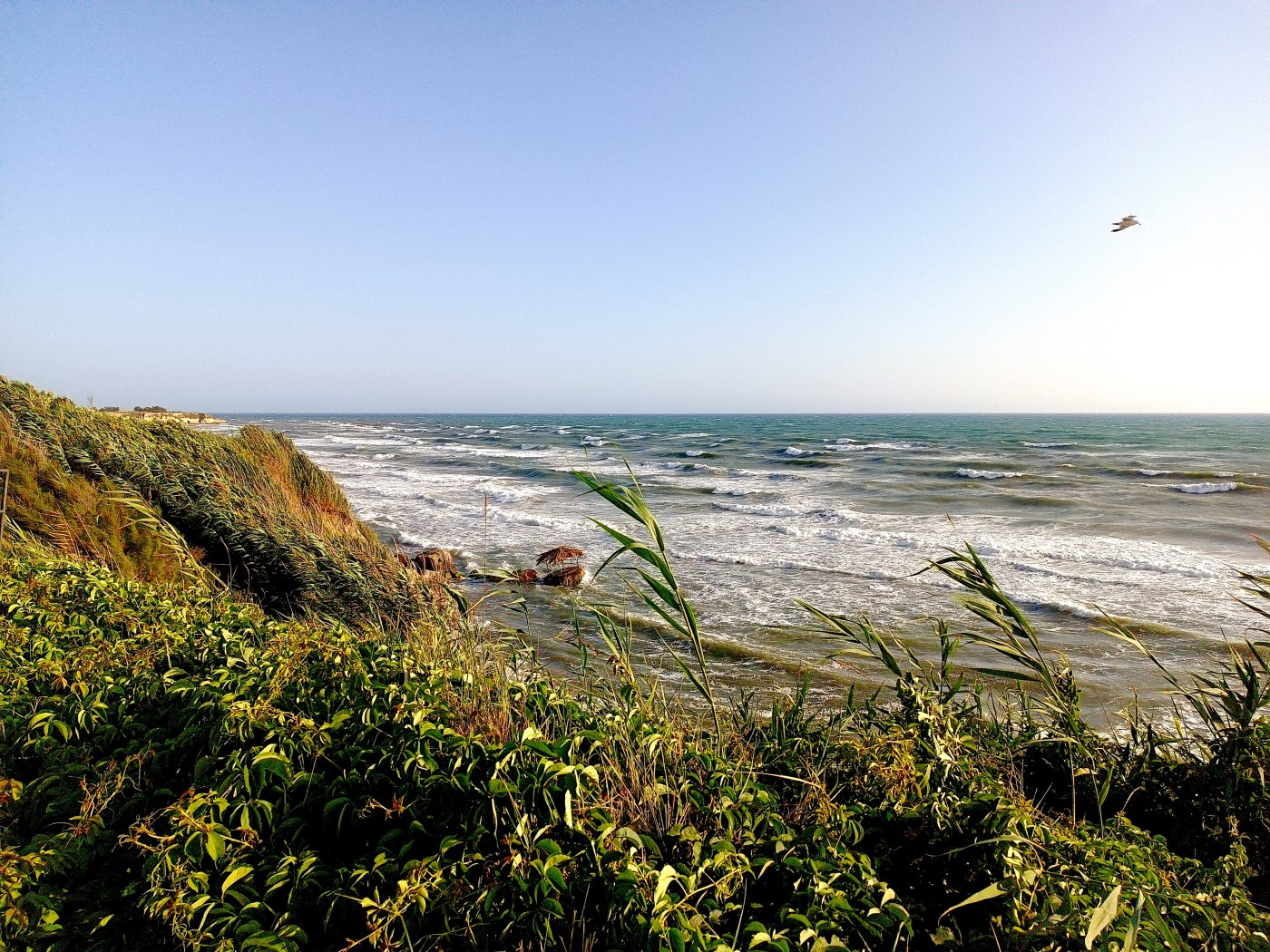
[photo:C.Certomà]
 Chiara Certoma'