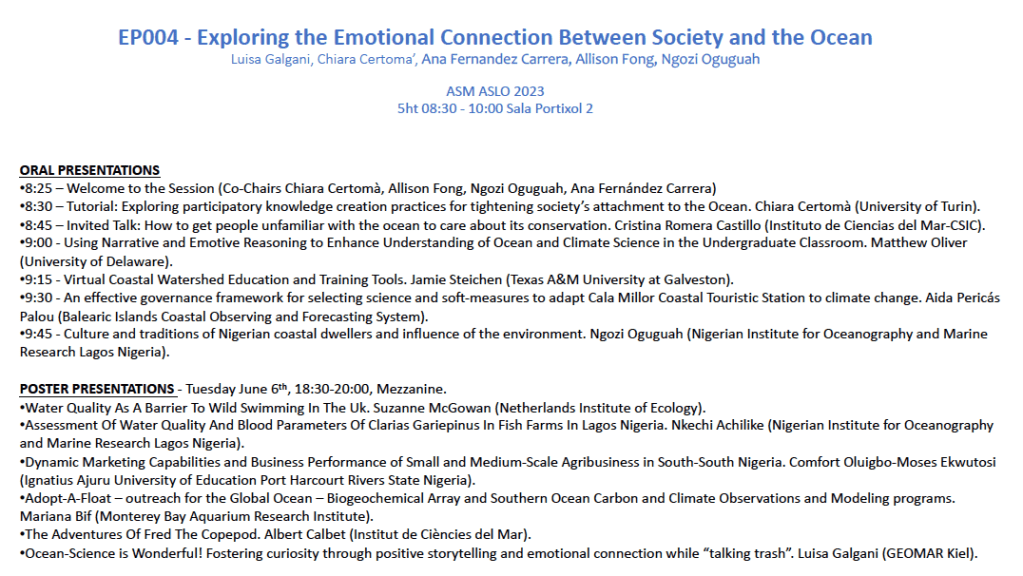
On the 5th of June 2023 I co-chaired the compelling session “EP004 – Exploring the Emotional Connection Between Society and the Ocean” at the Aquatic Sciences Meeting ASLO 2023 in Palma de Mallorca.
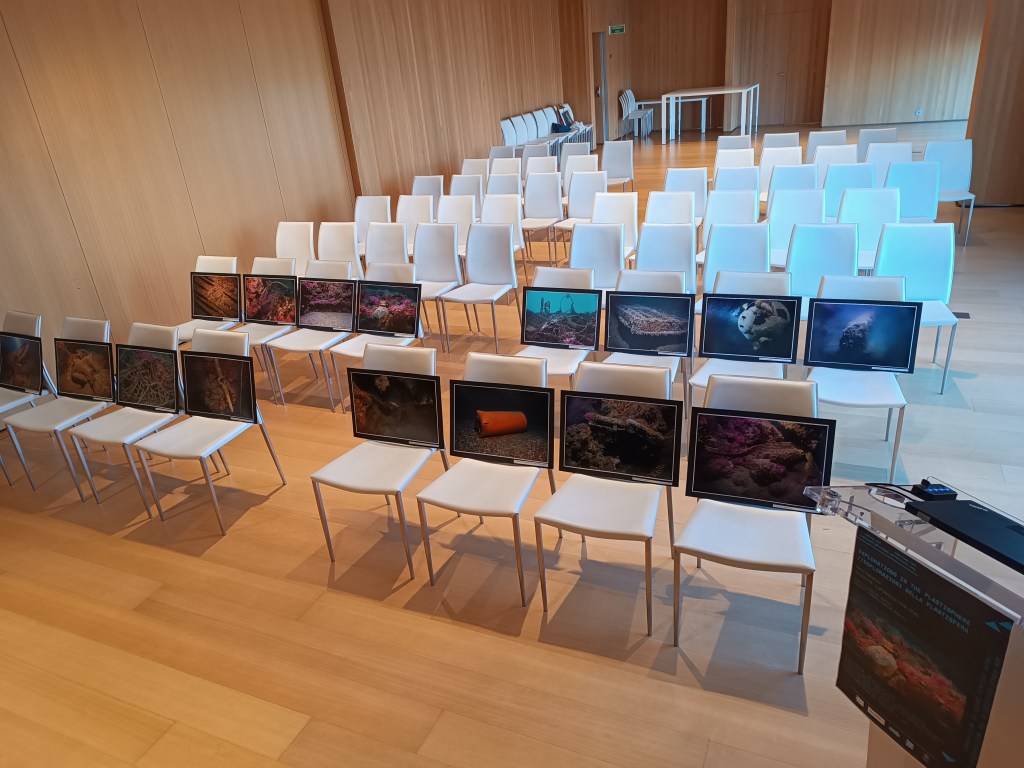
On this occasion we provided the participants with a bonus content and display the pictures of the photographic exhibition “Exploration of the Plastisphere” by adopting an innovative hands-on-art approach. In such a flash mob-kind unconventional photographic exhibition, artistic images through the physical occupation of space attract people’s attention. Participant have had the opportunity take and keep the photos with you for as long as you like, see the details, comment and ask questions, and pass them on to your neighbours. The physicality of the artistic pieces stimulates the relationship and invites reflection. We can’t ignore the problem as if it’s just in the background, on the wall, because it’s in our hands.



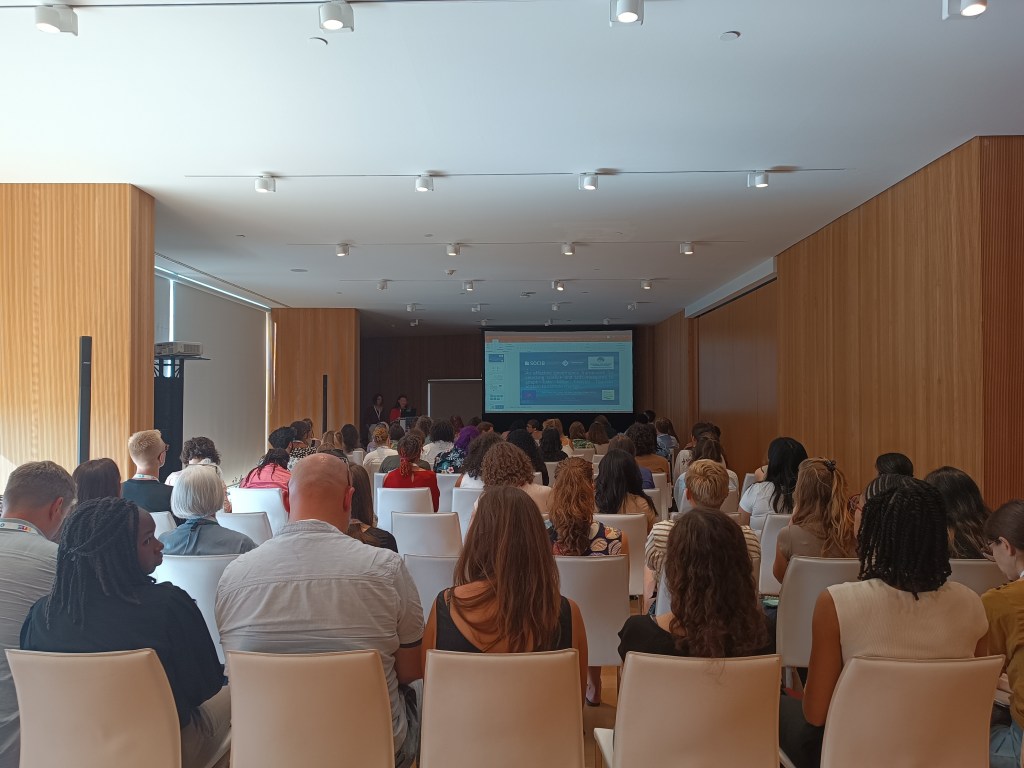
I gave a tutorial speech on “Exploring participatory knowledge creation practices for tightening society’s attachment to the Ocean”. On the assumption that wide awareness raising is crucial to produce virtuous changes in collective behaviors, and by sitting within the emerging Marine Social Science and Critical Ocean Geography perspective, I referred here to the potentialities and limits of participatory marine knowledge creation and sharing practices (PaKCS). In natural science’s operationalization of citizen science, the possibility for participants to establish an attachment with the object of research is limited as citizens are often called to act as “sensors” for the accumulation of data. PaKCS are rather inspired by the Extreme Citizen Science approach and require a systematic knowledge production and interpretation work put forward by non-professionals, building upon the tacit knowledge of locals. The aim was to simultaneously deploy all existing communication, participation, and engagement techniques to overcome the obstacles posed by marine systems, such as their inaccessibility. Therefore, the presentation discussed how radically participatory practices mobilize social and biological scientific analytic methods for planning, realizing and communicating new perspectives and knowledge on the maritime environment. It engages with the co-design of the research process (self-managed by, with, and for citizens), including the definition of research priorities, knowledge gathering and sharing, data acquisition, elaboration, and discussion process, training and dissemination.
 Chiara Certoma'
Leave a comment